Physical Address
304 North Cardinal St.
Dorchester Center, MA 02124
Physical Address
304 North Cardinal St.
Dorchester Center, MA 02124

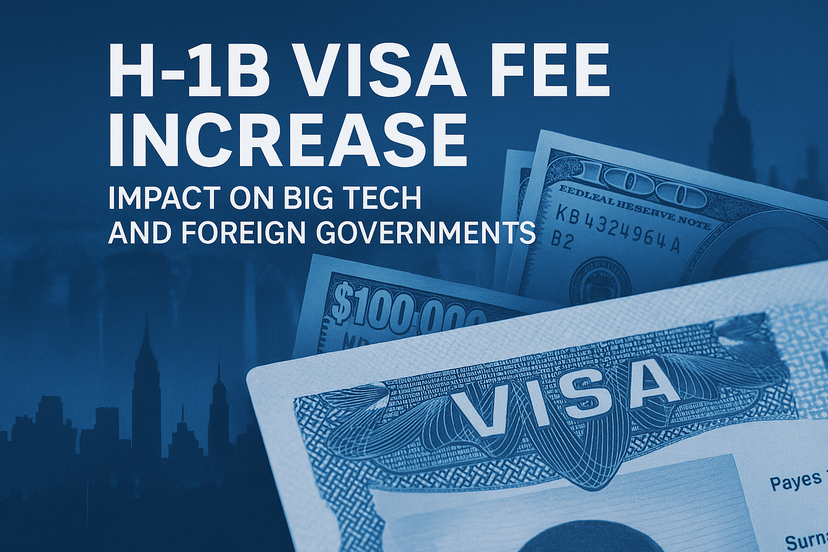
The recent announcement of a $100,000 fee on H-1B visas has sparked widespread concern among global technology firms and foreign governments. The new measure, set to apply to new applicants beginning with the upcoming lottery cycle, is not retroactive and does not affect current H-1B holders or recent lottery winners. While the White House describes the move as a way to prioritize American workers and discourage misuse of the program, industry leaders and foreign officials are warning about the potential disruptions this H-1B visa fee increase could cause to innovation, business competitiveness, and families relying on the program.
According to a report from CNBC, the announcement represents one of the administration’s most aggressive steps to restrict employment-based immigration.
The H-1B visa allows U.S. companies to hire highly skilled foreign workers, often in technology, finance, and research sectors. Each year, demand for these visas significantly outpaces supply, making the program critical for industries that rely on global talent.
The sudden announcement of a steep fee increase represents the most aggressive restriction on legal employment-based immigration in recent years.
The technology sector is one of the largest users of H-1B visas, with tens of thousands of foreign employees supporting software development, research, and engineering operations.
Here’s a look at the top 10 H-1B visa recipients for fiscal year 2025:
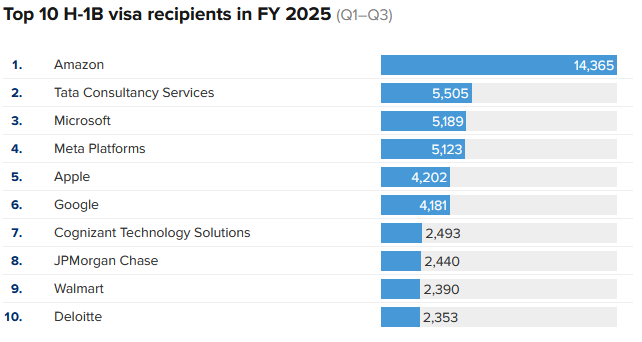
This chart highlights the scale of dependence on the program, particularly among Amazon, Microsoft, Meta, Apple, and Google. Together, these companies employ tens of thousands of H-1B workers, making them highly sensitive to cost increases and policy changes.
Several major employers have already issued internal advisories:
The impact on Big Tech companies could be significant:
The foreign government response has been swift, especially from countries with large numbers of citizens employed in the U.S. through H-1B visas.
These reactions underscore how immigration policies in the U.S. reverberate far beyond its borders, influencing diplomatic relations and labor strategies in other countries.
Beyond tech firms and foreign ministries, the high cost of H-1B visas could ripple across the broader economy.
The new rule imposes a $100,000 charge on new H-1B applicants. It does not apply to current visa holders or those who have already won a visa in the 2025 lottery. The fee is a one-time cost, not an annual charge.
It will first apply to the upcoming H-1B lottery cycle. Details on implementation timelines are still being clarified.
No. According to officials, the fee applies only to new applicants, not to renewals or current H-1B workers.
Officials argue that the policy discourages companies from “spamming the system” with excessive applications while ensuring that visas go to truly needed high-skilled workers. They also say it provides “certainty” to American businesses trying to hire responsibly.
Foreign governments have noted that the sudden change may disrupt families, with visa holders unable to travel internationally or facing unexpected costs if they seek new employment in the U.S.
The H-1B visa fee increase represents a turning point in U.S. immigration policy, with wide-ranging implications for technology companies, foreign governments, and skilled workers. While the administration frames the measure as a way to protect American workers, critics warn of higher costs, reduced competitiveness, and humanitarian disruptions.
The coming months will reveal whether businesses and foreign governments can adapt to these changes or whether the policy will spark longer-term shifts in global talent flows and economic partnerships.
Disclaimer: This article is for informational purposes only and should not be considered investment, financial, or legal advice.